Collegiate ministry is not a stepping stone. It is not a holding pattern until you get to “real” ministry. It is one of the most strategic mission fields on the planet, and if God has called you to college students, you should not apologize for staying there.
Too often, gifted campus ministers are subtly pressured to move on. Someone tells them they are “too talented” to stay on a campus or that it’s time for something else. Obedience matters more than optics. If God has called you to the campus, then stay faithful to the campus.
When you stay in collegiate ministry, you begin to see the fruit in ways you never expected. You watch students become leaders. You watch them share the gospel without you. And if you’re really blessed, you watch your own kids walk into that same mission field. That alone is worth staying.
When Bigger Becomes the Goal
In 2010, I stepped into collegiate ministry at Tarleton State University, a regional Division II school in Texas. The ministry was struggling, and if I’m honest, I was still figuring things out myself. I had just come off the mission field overseas and landed in a context that felt wildly different from where we’d been—culturally, spiritually, and strategically.
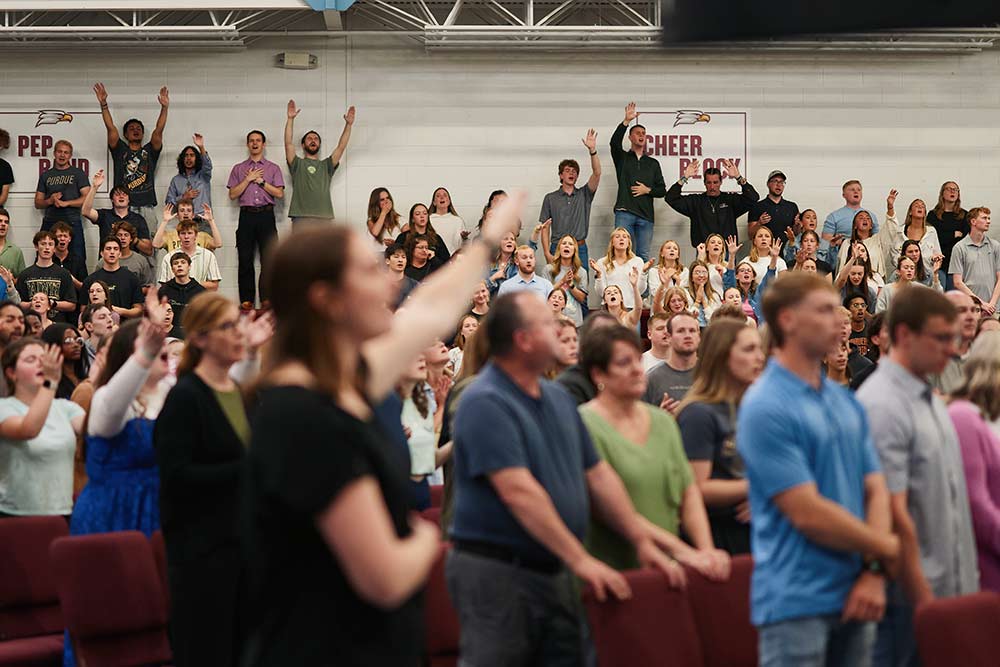
Like many leaders, I assumed success meant growth in attendance. If we could just build a big gathering, we were doing something right. Over the next four years, we did exactly that. The room filled up. We were running nearly 300 students in our large group, and pastors would walk in impressed.
But there was a problem we couldn’t ignore. Despite all that growth, we were seeing about four students a semester come to Christ. Evangelism was minimal. Multiplication was almost nonexistent. What we had created was a strong Christian gathering, not a gospel movement.
We were filling the room, but we weren’t reaching the field.
Filling the Field, Not the Room
That realization forced us to ask better questions. The issue wasn’t effort; rather, it was focus. Almost all evangelism ran through me: my preaching, my personality, and my platform. And the truth is, no single leader can reach every kind of student on campus.
We told students to share the gospel, but what they heard was, “Invite your friends to my thing.” That’s not evangelism. That’s event promotion.
When we shifted our goal from gathering students to equipping them, everything changed. Instead of asking how many people we could bring into the room, we asked how many students we could send into the harvest.
As students began sharing their faith in their own relational networks, we saw consistent gospel fruit. Students started coming to Christ almost every week—not because of one event, but because of hundreds of conversations I would never have access to.
No matter how good your ministry gathering is, there will always be students who won’t attend it. The only way to reach them is through personal, relational gospel witness.
From Assigned Sheep to Sent Shepherds
That same shift exposed a flaw in our small group model. We were assigning leaders groups and expecting them to shepherd students we handed to them. What we didn’t realize was that we were training dependence instead of leadership.
So, we changed our approach. Instead of giving leaders sheep, we told them they were shepherds and challenged them to find their own. We trained them, coached them, and then sent them out to recruit and lead.
At first, everything shrank. Groups disappeared. Leaders panicked. Recruiting is harder than inheriting. But the leaders who stayed began to grow in confidence, ownership, and vision.
Before long, we saw third- and fourth-generation groups led by students who had never even met me. That’s when I knew the ministry no longer depended on my presence. And that’s when it started to multiply.
Those same leadership skills—recruiting, discipling, multiplying—prepared students for something more. They started asking what it would look like to take this beyond their campus.
Planting Ministries Beyond One Campus
As we began walking other campuses, we couldn’t ignore the gospel gaps. Entire campuses had little to no evangelical presence.
At one point, God convicted me personally. I was willing to fly across the country to plant ministries, but I wasn’t willing to drive two blocks to reach a community college because it didn’t feel strategic or exciting. That conviction changed everything.
We began sending students, graduates, and staff to plant ministries on new campuses. Some launches were well planned. Others felt reckless. One happened during COVID, when students weren’t even allowed on campus. That team planted through social media, reaching incoming freshmen through direct messages. Today, that ministry is thriving.
One of the most meaningful moments for me came when a student I had prayed for over a year finally came to Christ and joined a mission effort on a campus she’d never visited. As I encouraged her, I realized she didn’t know who I was.
That’s the goal.
Be an Orchard, Not Just a Tree
Scripture describes the person who trusts the Lord as a tree planted by water. It bears fruit, provides shade, and endures hardship. That image is beautiful. But here’s the shift collegiate ministry must make.
Don’t just be a tree. Be an orchard.
One tree can bear fruit. An orchard transforms an entire landscape. You can see it from a distance. You can smell it in the air. It changes everything around it.
Your meeting space will never be big enough to shade your entire campus. Your ministry alone will never produce enough fruit to reach everyone. So, plant another tree. Then teach students to plant trees—small groups, ministries, and new campus works.
Stop fighting over fruit on one campus while entire schools nearby have no gospel presence. If we want to see a generation transformed, we have to think beyond our own trees. Orchard thinking raises the bar for discipleship and lowers the barrier for participation. It multiplies leaders, campuses, and gospel witness.
Around the world, this is already happening. I work with a student movement overseas with just a handful of staff and gospel presence on dozens of campuses. Thousands are coming to Christ—not because of control, but because of multiplication.
The question is not whether it can be done. The question is whether we’re willing to stop counting fruit on our trees and start planting orchards.
Adapted from the Collegiate Coaching Network. Learn more about our Collegiate Coaching Network and sign up for the next cohort.
Published February 6, 2026